Three new languages in a week
We asked for help translating Pragma Chess, and within a week it speaks Spanish, Russian and Simplified Chinese. A thank you to the people who made it happen.
On the night of 10 October we opened an issue on GitHub with a simple title: Translate Pragma Chess into your language. Pragma Chess spoke English and Italian. We hoped someone would answer within a few months. A week later it speaks five languages, and we did not expect it to happen this quickly.
Spanish, read by a native speaker
The first Spanish version arrived the day after the issue, written by us. A translation made by someone who does not speak the language every day always has something stiff in it, and Zeta (@zetachess) read it with a native ear and made it sound right: the licence of Qt, the messages of the opening book, the repertoire. Small changes, the kind only a native speaker notices.
Russian, all of it
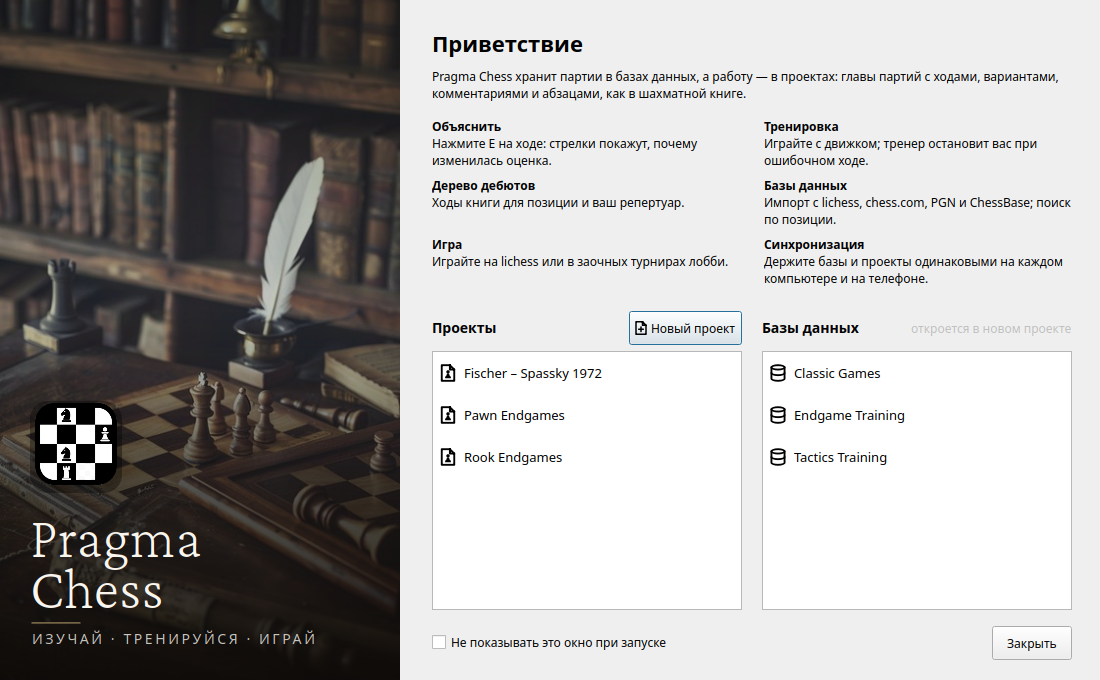
mrvi0 (@mrvi0) wrote "I'll take Russian", and a few days later sent the whole thing: every text of the interface, with the three plural forms Russian needs (1 партия, 2 партии, 5 партий), the whole guide and this web site. Explain, our main feature, is «Объяснить», the same word everywhere.
Simplified Chinese, and a good question
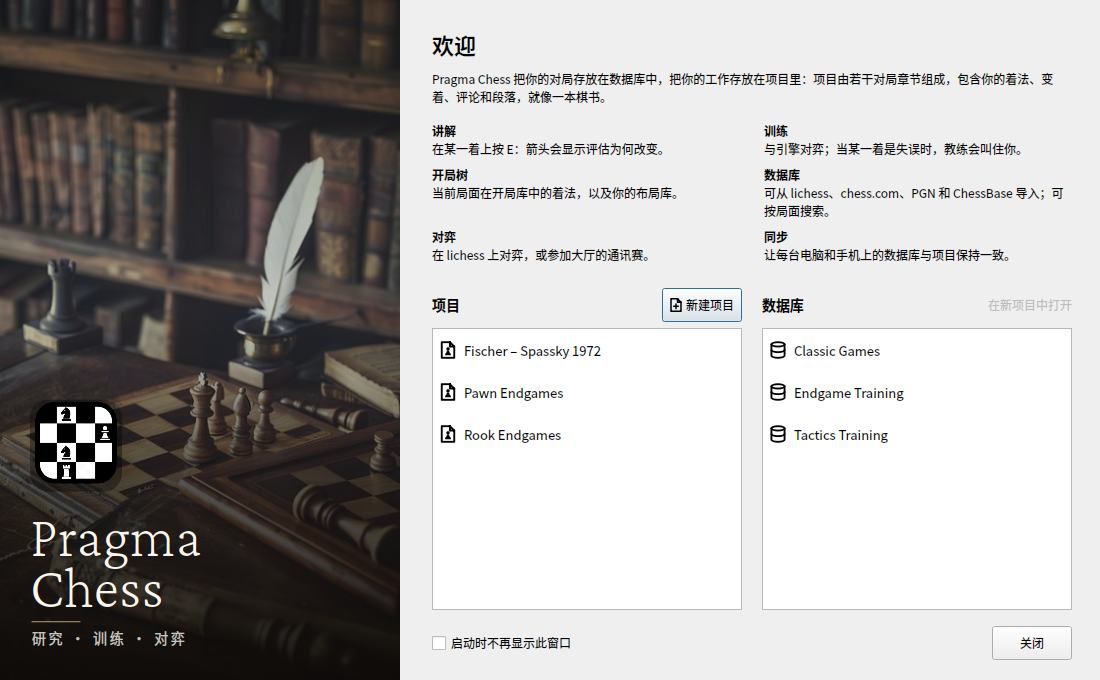
Wait-Again (@Wait-Again) started with a question before writing a single line: should the language be called zh_CN or zh? With zh_CN, Qt's own buttons (OK, Cancel) would be translated too, but the program might not pick Chinese by itself on a Chinese system. The doubt was right: the program compared only the language, zh, with the name of the file, zh_CN, and never found it. It is fixed now: Pragma Chess looks first for the country's translation, then for one of the same language written in the same script, so a computer in China or Singapore gets Simplified Chinese, and one in Taiwan, which writes in traditional characters, is not given it by mistake. Then came the translation: more than 1600 texts, the whole interface, with 讲解 for Explain.
Thank you
Translating a program is long, careful work, done for people you will never meet: a player in Moscow, in Madrid or in Shanghai who opens Pragma Chess and finds it in their own language. To Zeta, mrvi0 and Wait-Again: thank you, really.
Two invitations, to them and to whoever is reading. If you belong to a chess club, tell your club about Pragma Chess: it is free, open source, and now speaks one more language. A club that supports the project goes into the credits of the program and of this site, with its logo; CLUBS.md explains how. And if your language is still missing, issue #4 is open.